
🇬🇧 English
🇫🇷 Français
🇩🇪 Deutsch
🇪🇸 Español
🇮🇹 Italiano
🇳🇱 Nederlands
🇸🇪 Svenska
🇵🇹 Português
🇵🇱 Polski
🇩🇰 Dansk
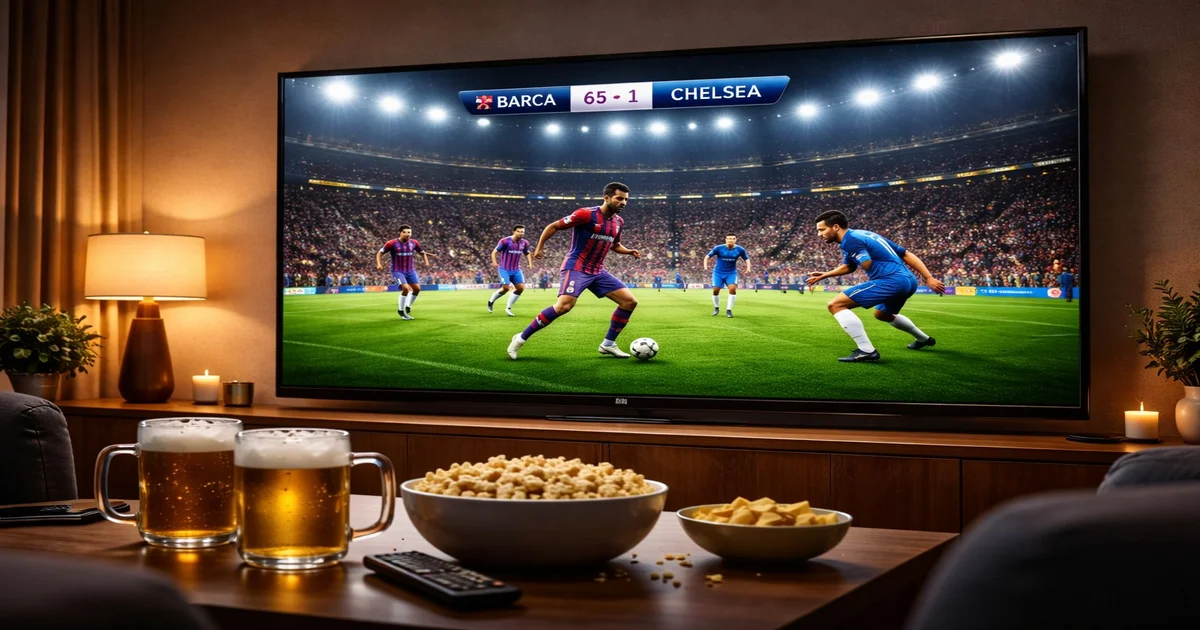
The landscape of football broadcasting has fundamentally changed. Traditional cable and satellite subscriptions are increasingly expensive, often costing €50–€100 per month for a comprehensive sports package. Many fans are discovering that IPTV offers a vastly superior experience: access to every major football league and tournament worldwide, in stunning 4K quality, at a fraction of the cost of legacy broadcasting solutions.
IPTV services aggregate channels from dozens of countries into a single subscription. This means you can watch the English Premier League on Sky Sports, La Liga on DAZN, Serie A on beIN Sports, the Bundesliga on Sky Germany, and Ligue 1 on Canal+ — all from one app, one subscription, one remote control. No more juggling multiple subscriptions or missing matches because your provider does not carry a specific league.
The flexibility of IPTV is unmatched. You can watch live football on your Smart TV at home, on your tablet during a commute, or on your phone while travelling abroad. Modern IPTV services support simultaneous multi-device streaming, so you can follow two matches at once or let family members watch different content on different screens. This level of access and convenience was simply impossible with traditional broadcasting even a few years ago.
Perhaps most importantly, premium IPTV providers in 2026 have invested heavily in infrastructure specifically designed for live sports. Anti-freeze technology, dedicated sports servers, adaptive bitrate streaming, and ultra-low latency delivery ensure that you see goals in near real-time without the buffering and delays that plagued earlier IPTV services. The technology has matured to the point where the IPTV viewing experience often surpasses that of traditional cable in terms of picture quality and reliability.
Not all IPTV services are created equal when it comes to live football. Sports streaming is the most demanding use case for IPTV because it requires consistently high bitrate delivery, minimal latency, and zero tolerance for buffering during critical moments. When evaluating a provider, several key features should be at the top of your checklist.
The best IPTV providers offer dedicated 4K sports channels alongside their HD offerings. A 4K football broadcast at 50fps delivers breathtaking clarity — you can see individual blades of grass, read jersey numbers from wide-angle shots, and follow the ball trajectory with precision that HD simply cannot match. Ensure your provider offers at least 1080p streams for all major sports channels, with 4K options for premium events like Champions League finals and World Cup matches.
There is nothing worse than your stream freezing just as a goal is about to be scored. Premium IPTV services employ anti-freeze technology that pre-buffers content intelligently, switching to lower quality briefly rather than freezing entirely when network conditions fluctuate. Low latency delivery (under 10 seconds behind live) is also critical so you do not hear your neighbours celebrate a goal before you see it on screen. Ask potential providers about their sports-specific latency figures and anti-freeze capabilities.
A quality football IPTV provider should offer channels from all major broadcasting networks: Sky Sports (UK), beIN Sports (Middle East and Asia), ESPN and Fox Sports (Americas), DAZN (Europe), Canal+ (France), Movistar+ (Spain), Sky Germany, and local free-to-air channels from every football-playing nation. The best services offer 15,000+ channels with dedicated sports categories, making it easy to find every match without scrolling through thousands of entertainment channels.
The ability to watch multiple matches simultaneously is a game-changer during busy match days when several important fixtures kick off at the same time. Look for providers that offer multi-screen functionality — the ability to display 2 or 4 streams on a single screen. Additionally, catch-up TV (the ability to rewatch matches for 24–72 hours after broadcast) is essential for fans who cannot always watch live due to work schedules or time zone differences.
The following channels represent the essential lineup that any serious football IPTV provider should include. Each channel covers specific leagues and tournaments, and having access to all of them ensures you never miss a match regardless of which competition is playing.
| Channel | Primary Football Coverage | Quality | Region |
|---|---|---|---|
| Sky Sports Premier League | English Premier League (128 live matches) | 4K / HD | UK & Ireland |
| beIN Sports 1–3 | La Liga, Ligue 1, Serie A, Champions League | 4K / HD | MENA / Asia |
| DAZN | Champions League, Serie A, Bundesliga | 4K / HD | Multiple |
| ESPN / ESPN+ | La Liga, Bundesliga, FA Cup, Serie A | HD | Americas |
| Canal+ Sport | Ligue 1, Champions League, Premier League | 4K / HD | France |
| Movistar+ Liga | La Liga (all matches) | 4K / HD | Spain |
| Sky Sport Bundesliga | Bundesliga (all matches) | HD | Germany |
| TNT Sports | Champions League, Premier League | 4K / HD | UK |
| SuperSport | Premier League, Serie A, La Liga | HD | Africa |
A premium IPTV provider like IPTV SmartHD includes all of the channels listed above plus hundreds of additional sports channels from around the world. This comprehensive coverage ensures that whether you follow the English Premier League, Spanish La Liga, Italian Serie A, German Bundesliga, French Ligue 1, or the UEFA Champions League, every single match is available at your fingertips in the highest possible quality.
The decision between IPTV and traditional cable/satellite for watching football comes down to cost, coverage, flexibility, and quality. The table below provides a comprehensive comparison to help you make an informed choice.
| Feature | IPTV (Premium) | Cable / Satellite | Free-to-Air |
|---|---|---|---|
| Monthly Cost | €10–€20 | €50–€100+ | Free |
| Number of Sports Channels | 200–500+ | 20–50 | 5–15 |
| 4K Football | Yes (major events) | Limited | Rarely |
| Multi-Device Streaming | Yes (2–4 devices) | No / Extra fee | No |
| International Leagues | All major leagues | 1–3 leagues | Selected matches |
| Catch-Up / Replay | 24–72 hours | Limited | No |
| Contract Required | No | 12–24 months | No |
| Watch Abroad | Yes (with VPN) | No | Region-locked |
As the comparison shows, IPTV offers dramatically better value for football fans. The combination of lower cost, vastly more channels, multi-device support, and no contract lock-in makes IPTV the clear winner for the vast majority of viewers. The only area where traditional cable maintains an advantage is latency — satellite broadcasts are typically 2–3 seconds ahead of IPTV — but this gap has narrowed significantly with modern IPTV infrastructure.
Setting up IPTV for football is straightforward regardless of which device you use. The process involves three steps: choosing a provider, installing an IPTV player app, and entering your subscription credentials. Below we cover the setup for the most popular devices used for football streaming.
On Smart TVs, download IPTV Smarters, TiviMate, or Smart IPTV from your TV's app store. Enter your Xtream Codes credentials or M3U URL provided by your IPTV service. Navigate to the Sports category and you will find all football channels organized by region and league. For the best experience, connect your TV via Ethernet and set the streaming quality to the maximum your internet speed supports.
The Amazon Fire Stick is one of the most popular devices for IPTV football because it is affordable (€30–€50), compact, and supports 4K HDR. Download TiviMate or IPTV Smarters from the Amazon App Store, or sideload them using the Downloader app. TiviMate is particularly popular among football fans for its multi-screen view that lets you watch up to four matches simultaneously on a single display.
Install IPTV Smarters or GSE Smart IPTV from the Google Play Store or Apple App Store. Enter your credentials and you can watch live football anywhere with an internet connection. This is perfect for watching afternoon matches during work breaks or following evening games while travelling. Most apps support background audio, so you can listen to match commentary while using other apps.
Buffering during a live football match is unacceptable, and top IPTV providers have developed sophisticated technology to eliminate it. Understanding how anti-freeze technology works helps you appreciate why choosing a premium provider is critical for sports viewing.
Anti-freeze technology works on multiple levels. At the server level, premium providers maintain dedicated sports servers that are separate from entertainment channel servers. These sports servers are provisioned with extra capacity specifically for peak demand during major matches — a Champions League final or World Cup semi-final can see 10x normal traffic. Providers who do not have dedicated sports infrastructure will experience degradation during these events.
At the application level, modern IPTV players implement adaptive bitrate streaming (ABR). When your connection momentarily dips, the player seamlessly switches from 4K to 1080p rather than buffering. This transition happens in under one second and is often imperceptible to the viewer. Once bandwidth recovers, the player automatically scales back up to the highest quality. This is far superior to the all-or-nothing approach of older IPTV technology where any bandwidth fluctuation resulted in a complete freeze.
Additionally, intelligent pre-buffering stores 3–5 seconds of content ahead of the current playback position. This buffer absorbs brief network hiccups without any visible interruption. Combined with redundant server routing that can switch your stream to an alternative server within milliseconds if one becomes overloaded, these technologies make modern IPTV remarkably resilient for live sports viewing.
Even the best IPTV provider cannot compensate for a poor home network setup. Follow these steps to ensure your connection is optimized for the smoothest possible football viewing experience on match day.
First, always use a wired Ethernet connection if possible. Wi-Fi, even on a modern 5 GHz network, introduces variability that can cause micro-buffering during fast-action sequences. A simple Ethernet cable from your router to your streaming device eliminates this variability entirely. If running a cable is not practical, use a powerline adapter which sends the network signal through your home's electrical wiring — these deliver near-Ethernet speeds with much better reliability than Wi-Fi.
Second, check your internet speed. For HD football streaming, you need at least 15 Mbps of reliable download speed. For 4K, you need 30–50 Mbps. Run a speed test on the device you will be using to stream, not on your phone in a different room. If your speed is below these thresholds, contact your ISP about upgrading your plan, or consider reducing the number of devices using your network during the match.
Third, change your DNS servers to Google (8.8.8.8) or Cloudflare (1.1.1.1). Many ISPs have slow DNS servers that can add unnecessary latency when your IPTV app resolves server addresses. Changing DNS is free, takes two minutes, and can noticeably improve both stream startup time and overall stability.
Fourth, if you suspect your ISP is throttling IPTV traffic, use a VPN. Connect to a server geographically close to you (same country) to minimize the latency added by the VPN tunnel. A quality VPN like NordVPN, ExpressVPN, or Surfshark adds only 5–15% overhead while completely preventing your ISP from identifying and throttling your IPTV traffic.
Yes. A comprehensive IPTV subscription includes Sky Sports, TNT Sports, and international broadcasters that together cover all 380 Premier League matches per season. Unlike UK domestic subscriptions that black out 3pm Saturday matches, international IPTV channels broadcast every single fixture including those blacked out domestically. This is one of the biggest advantages of IPTV for English football fans.
A minimum of 30 Mbps is required for stable 4K IPTV streaming, but 50 Mbps or more is strongly recommended. Football in 4K at 50fps produces bitrates of 15–25 Mbps, and you need headroom above the stream bitrate to absorb network fluctuations. If multiple devices share your connection, account for their bandwidth usage as well. A 100 Mbps fibre connection is ideal for households that stream 4K IPTV football while other family members use the internet simultaneously.
IPTV typically runs 5–15 seconds behind live satellite/cable broadcasts. This delay is due to the encoding, CDN distribution, and decoding pipeline required for internet delivery. For most viewers, this delay is completely unnoticeable unless they are watching alongside someone on cable or actively following live social media commentary. Premium IPTV providers have reduced this delay significantly, with some achieving under 5 seconds for major sports events.
Yes. The Champions League is available in 4K through several channels including TNT Sports (UK), DAZN (multiple countries), Canal+ (France), and Movistar+ (Spain). Premium IPTV providers carry all of these channels, giving you multiple 4K options for every Champions League match. The 4K experience for Champions League nights is exceptional — the combination of top-level football and ultra-high-definition visuals is truly spectacular.
First, try lowering the stream quality from 4K to 1080p in your IPTV app settings. If buffering persists, switch from Wi-Fi to Ethernet or restart your router. You can also try a different channel carrying the same match — many matches are broadcast on multiple channels simultaneously, and some may have better server availability than others. If the issue is consistently occurring, it may indicate that your IPTV provider's infrastructure is insufficient for peak demand, and you should consider switching to a more reliable service.
Instant access to 30,000+ channels in 4K. Free 24h trial — no credit card required.
Start Your Free Trial Now